
Plant ID
GD-EUP-003-0018
Common Name(s)
- Medusa’s Head Euphorbia
- Medusa Plant
- Medusa Spurge
- Snake Euphorbia
- Medusa Succulent
Plant Photograph
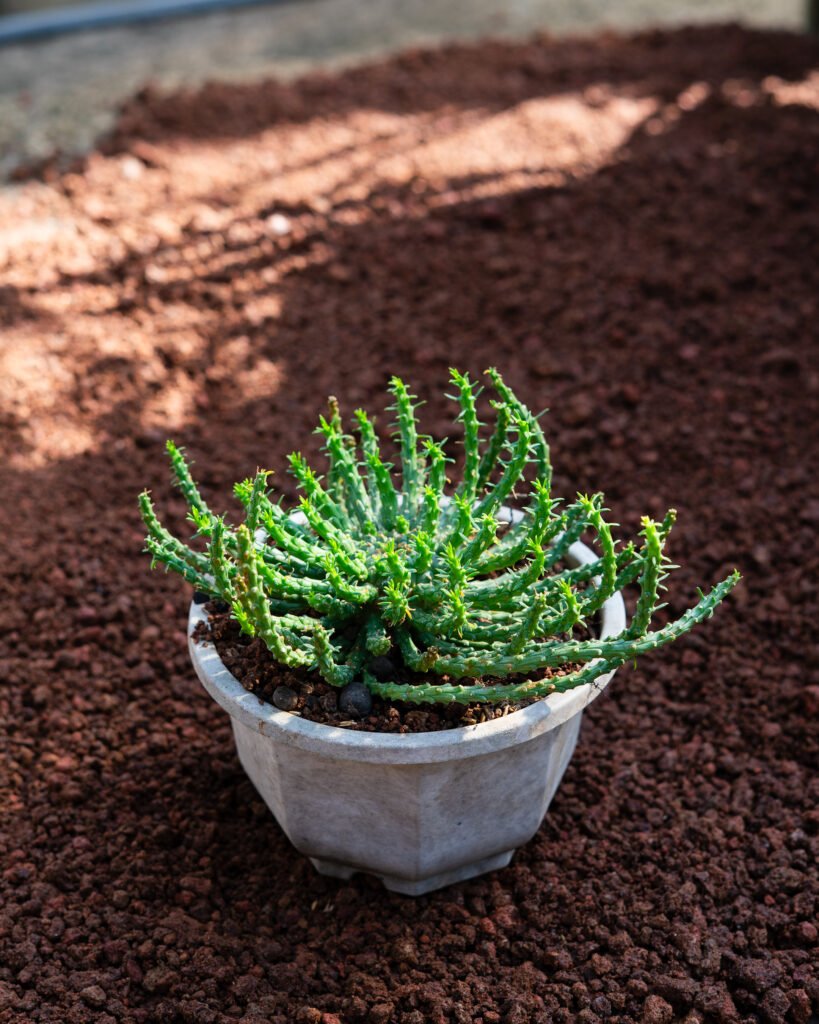
📷 Figure 1. Euphorbia flanaganii
Picture Description
A healthy specimen of Euphorbia flanaganii, displaying numerous slender, cylindrical stems radiating outward from a central crown, creating the appearance of the mythical Medusa’s flowing hair. Tiny yellow-green flower buds are emerging near the center, indicating active growth. Photographed at Green Desert Agritourism Park, this specimen showcases one of the most unusual growth forms found within the genus Euphorbia.
Photography: John Niño G. Ewas (@_____.5am)
Plant Description
Euphorbia flanaganii is a remarkable caudiciform succulent native to South Africa. It forms a swollen central stem (caudex) from which dozens of slender, snake-like branches radiate in all directions, giving rise to its famous common name, Medusa’s Head Euphorbia. During the growing season, small yellow-green cyathia appear near the center of the plant, adding delicate seasonal interest.
Its distinctive growth habit makes it one of the most recognizable members of the genus Euphorbia. Although unusual in appearance, it is easy to cultivate when provided with bright light, excellent drainage, and careful watering.
Basic Information
Scientific Name: Euphorbia flanaganii
Author Citation: N.E.Br.
Family: Euphorbiaceae
Genus: Euphorbia
Plant Type: Caudiciform succulent
Origin: Eastern Cape, South Africa
Plant Overview
Unlike the upright candelabra-like Euphorbia species, Euphorbia flanaganii grows as a low, spreading plant with numerous flexible stems radiating from a central growing point. Mature specimens gradually produce dense circular clumps that resemble a living green octopus or the legendary head of Medusa. Its sculptural appearance has made it one of the most prized collector’s succulents.
Botanical Description
Growth Habit
A low-growing caudiciform succulent with numerous radiating cylindrical stems.
Mature Size
- Height: 10–20 cm
- Spread: 30–60 cm or more
Stem
- Slender cylindrical branches
- Blue-green to gray-green
- Smooth with small tubercles
- White milky latex when cut
Leaves
Tiny leaves appear briefly near actively growing stem tips before dropping naturally.
Spines
Very small or absent; stem tubercles are much more noticeable than the spines.
Roots
A fibrous root system attached to a swollen central caudex.
Flowers
Small yellow-green cyathia produced near the center during the growing season.
Fruits
Small three-lobed capsules.
Native Habitat
Geographic Distribution
Native to:
- Eastern Cape, South Africa
Natural Ecosystem
- Rocky grasslands
- Open scrublands
- Dry slopes
Climate
Warm, semi-arid climate with seasonal rainfall.
Soil Type
Rocky, sandy, extremely well-drained soils.
Growing Conditions
Light
Bright light to partial sun.
Watering
Water thoroughly only after the soil has dried completely.
Soil
Fast-draining cactus or succulent mix rich in mineral components.
Temperature
Ideal:
18–32°C
Protect from frost.
Humidity
Prefers low humidity and excellent air circulation.
Fertilization
Feed lightly during active growth.
Potting
Shallow containers with excellent drainage are ideal.
Propagation
Usually propagated by division of offsets or stem cuttings.
Allow cuttings to callus before planting.
⚠ Wear gloves because the white milky latex can irritate the skin and eyes.
Growth Rate
Moderate.
Dormancy
Growth slows during cool weather.
Toxicity
⚠ Caution
Like all members of the genus Euphorbia, this plant produces a white milky latex that:
- Irritates the skin.
- Can cause severe eye irritation.
- Is toxic if ingested.
Keep away from children and pets.
Pests and Diseases
Common problems include:
- Mealybugs
- Scale insects
- Spider mites
- Root rot from excessive watering
Interesting Facts
- Named after Medusa, the mythical Greek figure with snakes for hair.
- Produces a swollen central caudex from which numerous stems radiate.
- One of the best-known caudiciform Euphorbia species.
- Mature plants often flower repeatedly from the central crown.
- Highly prized by collectors because of its extraordinary growth form.
Landscape and Collection Value
Recommended for:
- Collector’s succulent collections
- Botanical gardens
- Caudiciform displays
- Educational exhibits
- Decorative container gardens
Its unique medusoid form makes it a centerpiece in any succulent collection.
Conservation Status
Native populations occur in South Africa. Most cultivated plants are propagated by specialist growers, helping reduce collection pressure on wild populations.
Life’s Whisper
“What may appear wild from afar often reveals perfect harmony up close. True beauty is found in embracing the uniqueness of our own design.”
Green Desert Botanical Library Notes
This specimen forms part of the living collection of Green Desert Agritourism Park. Its distinctive Medusa-like form demonstrates the remarkable diversity of growth habits found within the genus Euphorbia. It provides visitors with an excellent example of caudiciform adaptation and highlights the extraordinary evolutionary creativity of succulent plants.
Navigation
⬅ Previous Plant: Euphorbia enopla
🏠 Home: Botanical Library – Euphorbia Collection
➡ Next Plant: Euphorbia obesa
References
For the complete list of botanical references, scientific literature, and online resources used in preparing the Green Desert Botanical Library, please visit the References page available from the Main Menu.